Drain Clearing Services Near Me: Clear Stubborn Drain Blockages in California
Professional drain clearing can restore flow to blocked sinks, showers, tubs, toilets, kitchen drains, and main drain lines while identifying problems responsible for recurring clogs.
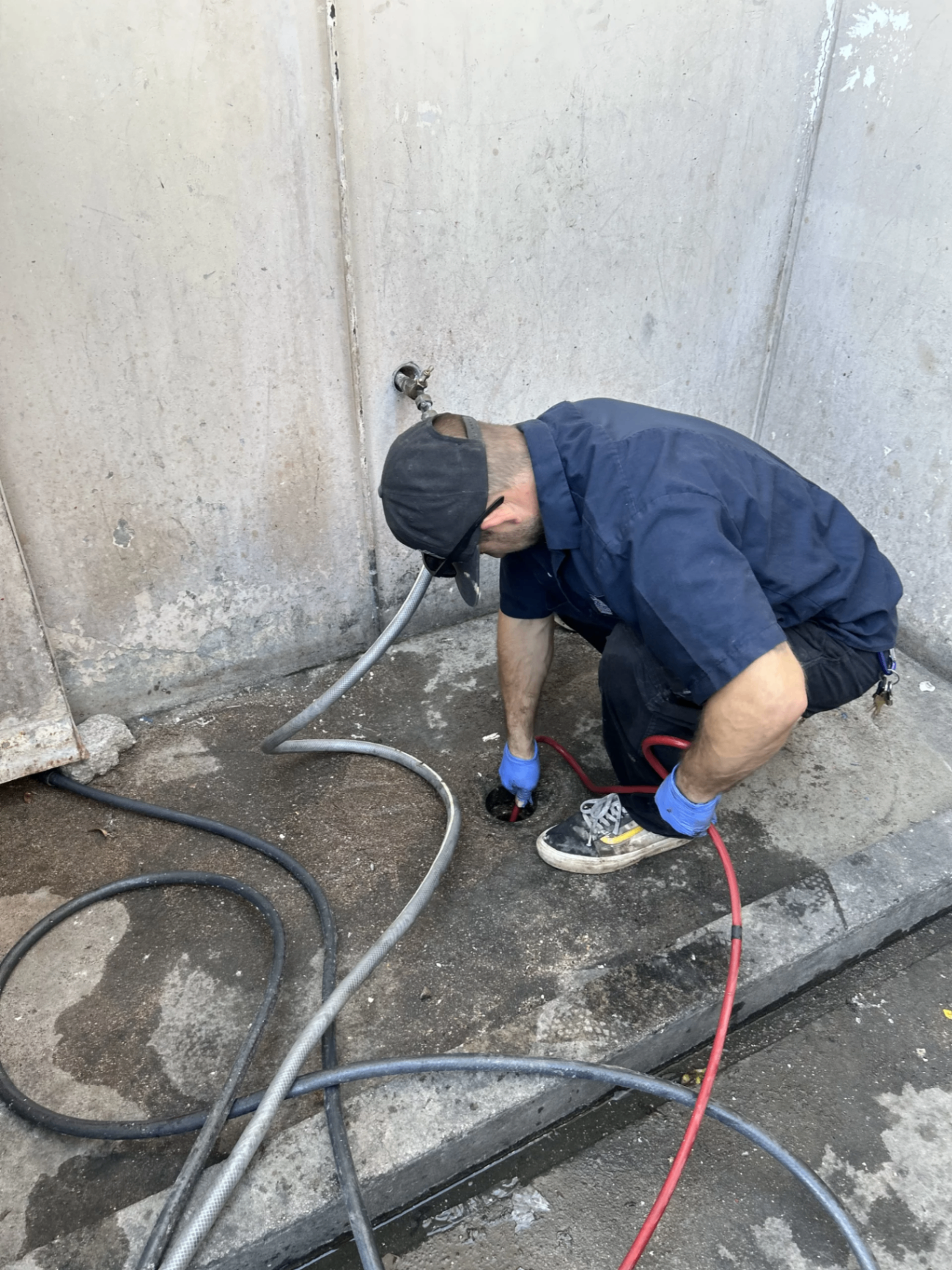
Every drain in a building blocks for different reasons, in different places, and needs a different approach. A shower and a kitchen sink have almost nothing in common beyond the word "drain." This page walks through drain clearing services fixture by fixture, what typically blocks each one, where the obstruction usually sits, and what it takes to clear it properly.
SpeeDee Drains and Plumbing is a licensed California plumbing contractor, CSLB #1130435, serving Orange County and Los Angeles County with same-day appointments, 24/7 emergency dispatch, free estimates, and a written workmanship warranty.
Kitchen Sink and Disposal Lines
What blocks it: grease, first and foremost, plus food solids, coffee grounds, and starchy waste that expands. Grease pours warm and hardens on the pipe wall, so the line narrows gradually over months.
Where it sits: usually further downstream than people expect, in the horizontal branch drain rather than the trap.
What clears it: a cable machine will reopen flow, but hydro jetting is the correct tool because it removes the grease coating rather than boring through it. Kitchen lines that have been snaked three times are the textbook case for jetting.
Bathroom Sink Drains
What blocks it: hair, soap scum, and toothpaste binding into a mat, accelerated by hard water.
Where it sits: very often at the pop-up stopper assembly, wrapped around the pivot rod just below the drain opening, not in the pipe at all. Otherwise the P-trap.
What clears it: removing and cleaning the stopper assembly resolves a surprising share of these. Beyond that, clearing the trap, then a small drum machine on the branch.
Tub and Shower Drains
What blocks it: hair almost exclusively, bound with soap scum into a dense plug.
Where it sits: in the tub's overflow and drain assembly, or in the trap immediately below. Tub drains are mechanically more involved than sinks because of the linkage between the stopper and the overflow.
What clears it: pulling and cleaning the stopper assembly, then a cable through the overflow opening rather than through the drain, which allows a straighter path to the trap. A tub or shower that drains slowly and gurgles when a toilet flushes is not a tub problem at all.
Toilets and Commodes
What blocks it: excess paper, wipes labeled flushable, cotton products, dental floss, and foreign objects.
Where it sits: the molded S-shaped trapway inside the porcelain, or the closet bend below the floor.
What clears it: a closet auger sized for the trapway with a protective sleeve that does not scratch the glaze. Where an object is lodged rather than a paper mass, retrieval is the goal, and pulling the toilet to clear from below is routine and preferable to pushing an object further down the line.
Floor Drains, Garage Drains, and Area Drains
What blocks it: sediment, leaves, debris, and in garages a mix of dust and oil. These drains are ignored until the day it rains hard.
Where it sits: in the trap, which frequently also dries out and lets sewer odor into the space.
What clears it: jetting and flushing, ideally before Southern California's concentrated winter rain events rather than during them.
Main Sewer Lines
What blocks it: root intrusion at clay pipe joints, grease accumulation, scale in cast iron, foreign objects, and structural defects, bellies, offsets, cracks, collapse.
Where it sits: anywhere between the building and the municipal connection, which is why a locator matters as much as the camera.
What clears it: a heavy sectional machine or a jetter with a root-cutting nozzle, followed by camera inspection. Clearing a main without a camera afterward tells you nothing about whether it will recur next month.
Reading What Your Drains Are Telling You
- One slow fixture: local obstruction, straightforward clearing.
- Two or more slow fixtures on the same side of the house: shared branch drain.
- Everything slow, lowest fixture backing up: main line. Stop using water and call.
- Toilet gurgles when the washer or tub drains: air displacement through the trap, indicating a partial main line blockage or a vent problem.
- Sewer odor with no visible backup: a dried trap, a venting issue, or a break in the drain line.
- The same fixture blocking on a schedule: a pipe condition, not a habit. This one earns a camera.
- Water backing up in the tub when the toilet flushes: classic main line signature.
Why We Ask About Chemical Drain Openers
When you call, we will ask whether anyone has poured chemical drain opener into the line. Please answer honestly. Caustic liquid sitting in a trap becomes a burn hazard for the technician who opens it, and it changes how the job is approached. Beyond safety, these products rarely clear real blockages, they generate heat that damages PVC joints and accelerates corrosion in cast iron and galvanized pipe, and they mask the symptom that would otherwise have prompted a proper diagnosis.
Clearing Drains in Multi-Unit and Commercial Buildings
Shared stacks and branch lines mean the reporting unit is often not the problem unit. Camera documentation of the exact location of a blockage settles both the repair approach and, in HOA and rental contexts, the responsibility question. For restaurants, grease line clearing during service hours is the most expensive version of a problem that a scheduled jetting interval largely eliminates.
Drain Clearing Across Our Service Area
Fullerton, Anaheim, Brea, Buena Park, Cypress, Garden Grove, La Habra, La Mirada, Orange, Placentia, Santa Ana, Stanton, Westminster, Whittier, Yorba Linda, Los Angeles, Long Beach, Pasadena, Downey, Torrance, and Cerritos, with 24/7 dispatch when a blocked drain becomes an active backup.
More from SpeeDee Drains and Plumbing
- Drain Cleaning, clearing for every fixture and line
- Kitchen Drain Cleaning, grease, disposal, and branch lines
- Bathroom Drain Unclogging, sinks, tubs, showers, and toilets
- Floor Drain Cleaning, garages, utility rooms, and below-grade spaces
- Sewer Line Repair, when clearing is not the answer
Additional Plumbing Resources
- Contractors State License Board (CSLB), verify licensing before hiring
- EPA WaterSense, water efficiency and household plumbing guidance
- CDC Healthy Water, safety after contact with wastewater
- Consumer Product Safety Commission, caustic drain product hazards
- California Building Standards Commission, drainage, waste, and vent requirements in California
Frequently Asked Questions
How do I tell whether the problem is one drain or my main line?
Count the affected fixtures. One slow drain is a local obstruction. Two or more on the same side of the house points to a shared branch. Everything slow with the lowest fixture backing up is the main line, and you should stop using water immediately.
Why does my tub back up when I flush the toilet?
That is the classic signature of a main line blockage. Water leaving the toilet cannot get past the obstruction, so it takes the path of least resistance and comes up through the lowest opening, which is usually a tub or shower drain.
Is a tub drain harder to clear than a sink?
Mechanically, yes. Tub drains involve a linkage between the stopper and the overflow assembly, and the cable is usually fed through the overflow opening rather than the drain to get a straighter path to the trap.
Why do you ask whether I used chemical drain cleaner?
Safety. Caustic liquid sitting in a trap is a burn hazard for the technician who opens it, and it changes how the job is approached. Please tell us if you have, even if it was days earlier.
What is a belly in a drain line?
A section of pipe that has settled below the correct slope, so water and solids pool there instead of flowing through. It causes recurring blockages that no amount of clearing resolves, and it is visible on a camera inspection.
When should garage and area drains be cleared?
Before the rainy season, not during it. Floor, garage, and area drains accumulate sediment, leaves, and debris while dry and then fail during Southern California's concentrated winter storms when they are needed most.
Recent SpeeDee Drains and Plumbing Work
Emergency plumbing guides
24/7 help, explained page by page
In-depth guides on emergency plumbers, burst pipes, gas leaks, blocked sinks and toilets, and drain cleaning across Orange County and Los Angeles County.
- emergency plumber near me
- emergency plumber
- 24 hour plumber near me
- emergency plumber la
- blocked sink plumber
- blocked toilet plumber
- plumber for gas leak
- emergency plumbing services
- plumbing services emergency
- 24 hour plumber
- 24 hr plumber
- burst pipe plumber
- plumber for burst pipes
- drain cleaner services near me
- drain clearing services near me
- 24 7 plumber
Common questions
FAQs about Drain Clearing Services Near Me: Clear Stubborn Drain Blockages in California
How do I tell whether the problem is one drain or my main line?
Count the affected fixtures. One slow drain is a local obstruction. Two or more on the same side of the house points to a shared branch. Everything slow with the lowest fixture backing up is the main line, and you should stop using water immediately.
Why does my tub back up when I flush the toilet?
That is the classic signature of a main line blockage. Water leaving the toilet cannot get past the obstruction, so it takes the path of least resistance and comes up through the lowest opening, which is usually a tub or shower drain.
Is a tub drain harder to clear than a sink?
Mechanically, yes. Tub drains involve a linkage between the stopper and the overflow assembly, and the cable is usually fed through the overflow opening rather than the drain to get a straighter path to the trap.
Why do you ask whether I used chemical drain cleaner?
Safety. Caustic liquid sitting in a trap is a burn hazard for the technician who opens it, and it changes how the job is approached. Please tell us if you have, even if it was days earlier.
What is a belly in a drain line?
A section of pipe that has settled below the correct slope, so water and solids pool there instead of flowing through. It causes recurring blockages that no amount of clearing resolves, and it is visible on a camera inspection.
When should garage and area drains be cleared?
Before the rainy season, not during it. Floor, garage, and area drains accumulate sediment, leaves, and debris while dry and then fail during Southern California's concentrated winter storms when they are needed most.