Plumber for Burst Pipes in California: Emergency Pipe Repair Services
Need a plumber for burst pipes? Professional plumbing repair can help stop active leaks, locate damaged piping, replace failed sections, and restore water service safely.
When you call a plumber for burst pipes, the pipe is usually the smaller half of the problem. The larger half is everything the water touched on its way out. This page covers the sequence that follows a burst, containment, repair, drying, documentation, and the insurance conversation, so you know what should happen and in what order.
SpeeDee Drains and Plumbing is a licensed California plumbing contractor, CSLB #1130435, dispatching 24/7 across Orange County and Los Angeles County with free estimates and a written workmanship warranty.
The First Hour, In Order
- Close the main shutoff. Curb box at the front of the property, or where the supply enters an exterior wall. Clockwise. If the break is at one fixture, its angle stop may be sufficient.
- Cut power to any area with standing water. Do not stand in water to reach a breaker panel.
- Open a low faucet to drain remaining pressure from the system, which reduces how much more water leaves the break.
- Photograph and video everything before you move or dry anything. This is the single most valuable five minutes for your insurance claim.
- Move belongings out of the water and off wet flooring.
- Start air movement if you safely can, open windows, run fans away from any electrical hazard.
- Call a plumber, then call your insurer. In that order. The insurer will ask what the cause was, and you want a professional answer.
Where the Water Actually Goes
Understanding the path explains why speed matters so much.
Surface first, then edges. Water finds the perimeter of a room and wicks upward into baseboard, drywall bottom plates, and the exposed bottom edge of cabinetry. Particleboard and MDF cabinet bases swell irreversibly within hours.
Down through the floor assembly. In two-story construction, water reaches the subfloor, travels along joists, and appears in the ceiling below, often in a different room than the break.
Sideways under finished flooring. On slab-on-grade construction, which dominates postwar Southern California housing, water moves laterally beneath laminate, engineered wood, and vinyl plank. The visible wet area is routinely a fraction of the actual wet area.
Into wall cavities and insulation. Saturated insulation does not dry on its own and will not without removal or forced drying. This is the transition point from plumbing repair into remediation.
What Our Technician Does On Site
Confirm containment. Verify the correct valve is closed and the system is depressurized.
Locate the failure precisely. Visible breaks are straightforward. Concealed breaks inside walls, above ceilings, or beneath a slab are located with acoustic listening equipment and electronic detection, so access is cut to the smallest necessary opening instead of exploring by removing drywall.
Repair the failed section in appropriate material for the existing system and location, with joints made properly and the system pressure-tested rather than visually spot-checked.
Assess the rest of the run. The technician will tell you plainly whether this was a one-off mechanical failure or the leading edge of a material failure that will repeat. If it is the second or third pinhole on the same galvanized or thin-wall copper run, you get numbers for both continued repair and a repipe.
Restore service and document. Water back on, all fixtures tested, and a written invoice describing cause and scope, the document your insurer will ask for.
The Insurance Conversation
Standard homeowner policies in California generally cover sudden and accidental water damage, while long-term seepage and gradual leaks are commonly excluded. That distinction is why documentation of cause matters so much, and why a plumber's written description of the failure is worth more than your own account of it.
Policies also typically cover the damage the water caused but not necessarily the failed pipe itself. Practical implications: photograph before cleanup, keep every estimate and invoice, keep damaged material until an adjuster has seen it or you have documented it thoroughly, and get the cause in writing. We are not insurance professionals and do not give coverage advice, but we do provide clear written documentation of what failed and why, which is the piece only a plumber can supply.
Drying and Restoration Come After Us
Our scope ends at the plumbing. Structural drying, moisture mapping, antimicrobial treatment, and rebuild are restoration work performed by a separate specialty. The important thing is sequence: the pipe must be repaired and the source verified dry before drying equipment goes in, or the restoration contractor is working against an ongoing leak.
Rough timeline for a moderate event: plumbing repair the same visit, drying equipment for three to five days, then rebuild. Slab leaks and concealed failures discovered late run longer.
Special Case: Burst Pipes Under a Slab
A pressurized line failing beneath a concrete slab presents differently, a warm spot on the floor, running-water sound with all fixtures off, an unexplained water bill increase, or damp flooring with no visible source. There is often no dramatic burst at all, just steady loss into the soil beneath your foundation.
Repair options are a spot repair through the slab, or a reroute that abandons the failed line and runs new pipe overhead or through walls. Reroute is frequently the better long-term choice when the rest of the under-slab run is the same age and material. Both get quoted so you can compare.
Serving Homes and Businesses Across Southern California
Fullerton, Anaheim, Brea, Buena Park, Cypress, Garden Grove, La Habra, La Mirada, Orange, Placentia, Santa Ana, Stanton, Westminster, Whittier, Yorba Linda, Los Angeles, Long Beach, Pasadena, Downey, Torrance, and Cerritos. Residential, multi-unit, and commercial, at every hour.
More from SpeeDee Drains and Plumbing
- Leak Detection, acoustic and electronic location of concealed leaks
- Pipe Repair & Replacement, section repair, reroutes, and repiping
- Emergency Plumbing, 24/7 response to active water loss
- Plumber in Los Angeles, LA County coverage from our Wilshire location
- Customer Reviews, how we handle emergencies, in clients' words
Additional Plumbing Resources
- Contractors State License Board (CSLB), license verification and consumer protections
- EPA WaterSense, water loss from household leaks
- CDC Mold Guidance, health considerations after water intrusion
- California Department of Insurance, homeowner claim rights and complaint process in California
- Ready.gov, documenting property damage and preparing in advance
Frequently Asked Questions
Should I call my insurance company or a plumber first?
Call the plumber first. Your insurer will ask what caused the failure, and a professional written description of the cause and scope is far more useful to a claim than your own account. Stopping the water also limits the loss the claim has to cover.
Should I clean up before the adjuster sees it?
Photograph and video everything first, and avoid discarding damaged material until the adjuster has seen it or you have documented it thoroughly. You can and should stop ongoing damage, but document before you dry.
Does homeowners insurance cover burst pipes in California?
Standard policies generally cover sudden and accidental water damage while excluding long-term seepage and gradual leaks, and they often cover the resulting damage rather than the failed pipe itself. We are not insurance professionals, so confirm specifics with your carrier.
How much of my floor is actually wet?
Usually more than you can see. On slab-on-grade construction, water travels laterally beneath laminate, engineered wood, and vinyl plank, so the visible wet area is routinely a fraction of the actual affected area. Moisture mapping identifies the real extent.
Do you handle the drying and rebuild too?
No. Our scope is the plumbing repair. Structural drying, moisture mapping, antimicrobial treatment, and rebuild are performed by restoration specialists, and the pipe repair must be completed and verified first so drying is not working against an active leak.
What if the burst pipe is under my concrete slab?
Slab leaks are located with electronic and acoustic detection. Repair is either a spot repair through the slab or a reroute that abandons the failed line and runs new piping overhead or through walls. When the rest of the under-slab run is the same age and material, a reroute is often the better long-term choice.
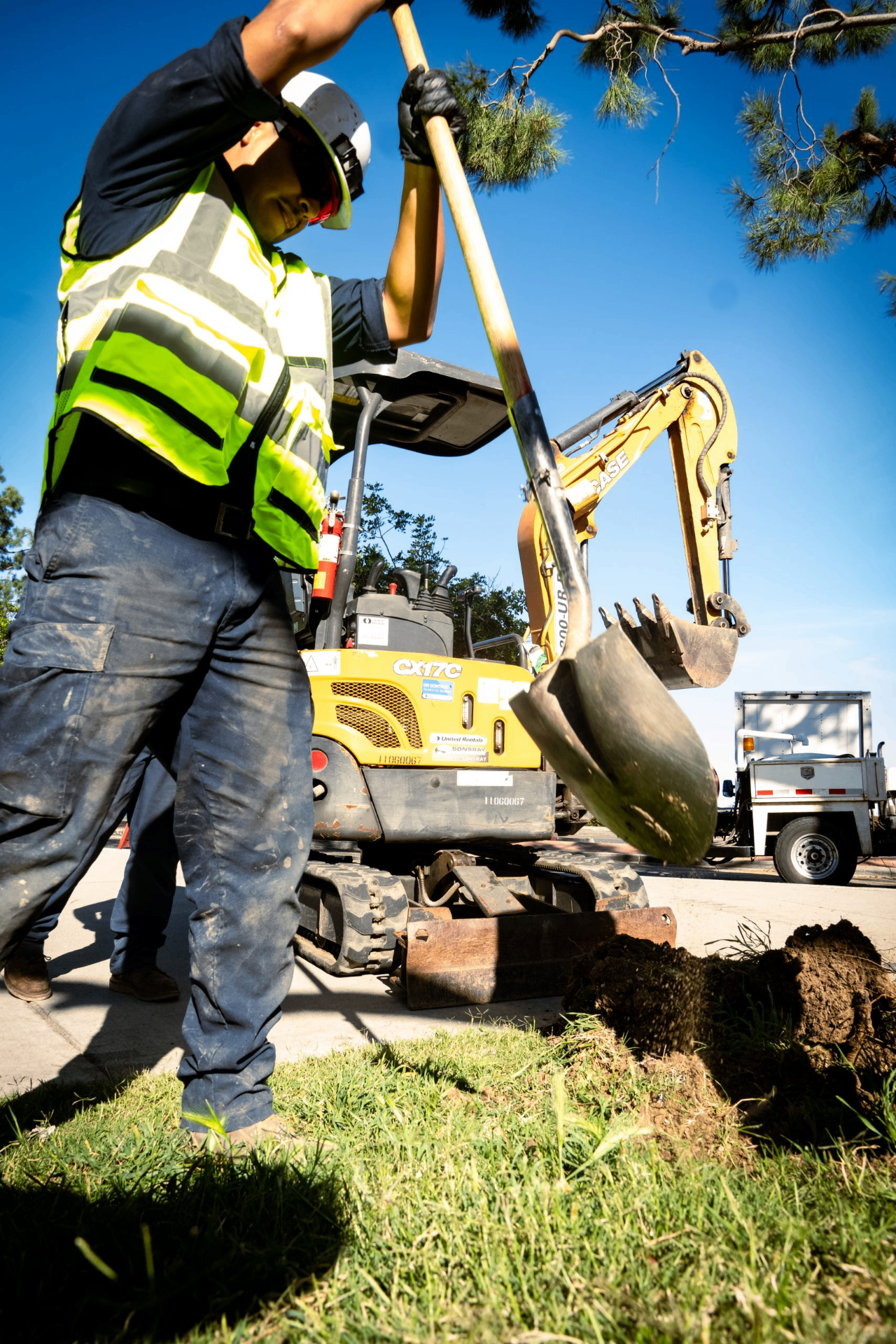
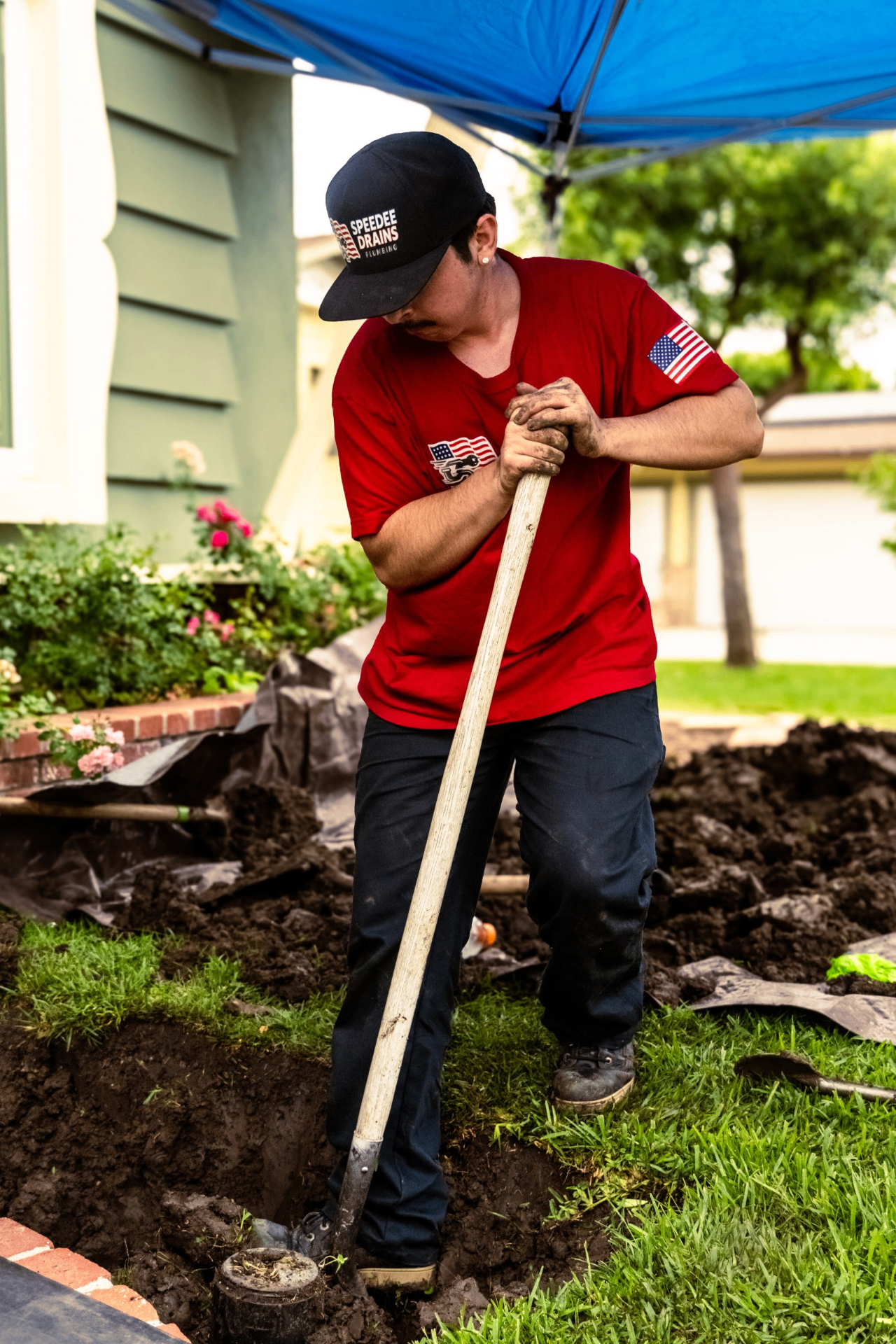
Recent SpeeDee Drains and Plumbing Work
Emergency plumbing guides
24/7 help, explained page by page
In-depth guides on emergency plumbers, burst pipes, gas leaks, blocked sinks and toilets, and drain cleaning across Orange County and Los Angeles County.
- emergency plumber near me
- emergency plumber
- 24 hour plumber near me
- emergency plumber la
- blocked sink plumber
- blocked toilet plumber
- plumber for gas leak
- emergency plumbing services
- plumbing services emergency
- 24 hour plumber
- 24 hr plumber
- burst pipe plumber
- plumber for burst pipes
- drain cleaner services near me
- drain clearing services near me
- 24 7 plumber
Common questions
FAQs about Plumber for Burst Pipes in California: Emergency Pipe Repair Services
Should I call my insurance company or a plumber first?
Call the plumber first. Your insurer will ask what caused the failure, and a professional written description of the cause and scope is far more useful to a claim than your own account. Stopping the water also limits the loss the claim has to cover.
Should I clean up before the adjuster sees it?
Photograph and video everything first, and avoid discarding damaged material until the adjuster has seen it or you have documented it thoroughly. You can and should stop ongoing damage, but document before you dry.
Does homeowners insurance cover burst pipes in California?
Standard policies generally cover sudden and accidental water damage while excluding long-term seepage and gradual leaks, and they often cover the resulting damage rather than the failed pipe itself. We are not insurance professionals, so confirm specifics with your carrier.
How much of my floor is actually wet?
Usually more than you can see. On slab-on-grade construction, water travels laterally beneath laminate, engineered wood, and vinyl plank, so the visible wet area is routinely a fraction of the actual affected area. Moisture mapping identifies the real extent.
Do you handle the drying and rebuild too?
No. Our scope is the plumbing repair. Structural drying, moisture mapping, antimicrobial treatment, and rebuild are performed by restoration specialists, and the pipe repair must be completed and verified first so drying is not working against an active leak.
What if the burst pipe is under my concrete slab?
Slab leaks are located with electronic and acoustic detection. Repair is either a spot repair through the slab or a reroute that abandons the failed line and runs new piping overhead or through walls. When the rest of the under-slab run is the same age and material, a reroute is often the better long-term choice.