Why Your Drains Keep Clogging (and What Actually Fixes It)
A recurring clog is a symptom, not the problem. Here are the eight causes we find most often in Fullerton homes and how each one is actually fixed.
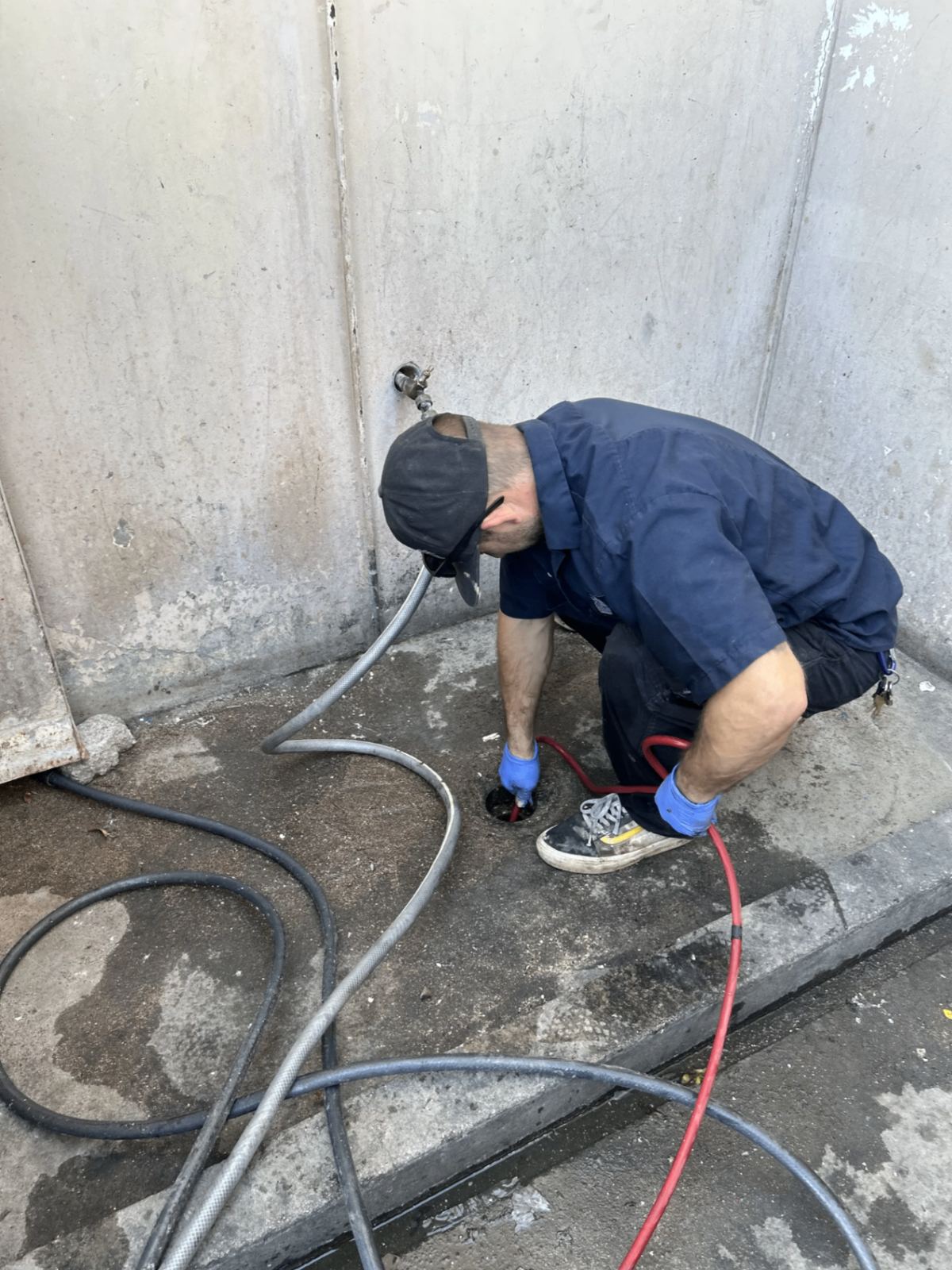
Most homeowners call about a clog. What they usually have is a pipe condition producing clogs. If a drain backs up two or three times a year, clearing it again is not a repair, it is a subscription.
The eight causes we find most often
- Grease that cooled in the horizontal run. Warm grease pours easily, then hardens in the first flat section of pipe and collects everything that arrives after it. This is the number one cause behind kitchen sink clogs.
- Hair and soap scum. Soap fats bind to hair and build a felt-like ring inside the pipe. See our page on hair clogs.
- Tree roots. Fullerton has mature street trees and older clay laterals. Roots find joints, then catch paper. Read more on root intrusion.
- Scale in cast iron. Older homes built before the mid-1970s often have cast iron drains with a rough, tuberculated interior that grabs solids.
- A belly in the line. Soil settlement creates a low spot where water stands and solids drop out.
- Offset or separated joints from ground movement or root pressure.
- Wrong items flushed. Wipes labeled flushable do not break down. Neither do paper towels, dental floss, or cat litter.
- Undersized or poorly vented piping from a past remodel, which starves the drain of air and slows flow.
Cabling versus hydro jetting
A cable machine is the right tool for a single blockage and for cutting roots. It restores flow quickly. It does not scour the pipe wall, so grease and scale remain. Hydro jetting uses high-pressure water to strip the interior back toward bare pipe, which is what breaks the repeat cycle on grease and soap lines. On fragile or already-damaged pipe, jetting is not appropriate, which is why we camera first.
When the answer is a repair, not a cleaning
If the camera shows a belly, a crack, an offset, or heavy root mass at a joint, no cleaning method will hold. That is a sewer line repair conversation, and we would rather have it honestly than sell you a fourth clearing.
Related reading: hydro jetting vs snaking, signs of a sewer line problem, and drain cleaning services near me.
Recent SpeeDee Drains and Plumbing Work
Emergency plumbing guides
24/7 help, explained page by page
In-depth guides on emergency plumbers, burst pipes, gas leaks, blocked sinks and toilets, and drain cleaning across Orange County and Los Angeles County.
- emergency plumber near me
- emergency plumber
- 24 hour plumber near me
- emergency plumber la
- blocked sink plumber
- blocked toilet plumber
- plumber for gas leak
- emergency plumbing services
- plumbing services emergency
- 24 hour plumber
- 24 hr plumber
- burst pipe plumber
- plumber for burst pipes
- drain cleaner services near me
- drain clearing services near me
- 24 7 plumber
- why drains keep clogging
- hydro jetting vs drain snaking
- signs of a sewer line problem
- kitchen sink drain care
- shower drain clog prevention
- tree roots in sewer lines
- what not to flush
- garbage disposal troubleshooting
- drain cleaning cost
- sewer camera inspection
- slow drain vs main line clog
- restaurant grease line maintenance
- toilet keeps backing up
- how often to clean drains
- chemical drain cleaner risks
- drain cleaning Anaheim
- drain cleaning Brea
- drain cleaning Westminster
- drain cleaning Placentia
- drain cleaning Whittier
- drain cleaning Buena Park
- drain cleaning La Habra
- drain cleaning Yorba Linda
- drain cleaning Garden Grove
- drain cleaning Cypress
- drain cleaning Orange
- drain cleaning Santa Ana
- drain cleaning in Fullerton CA
- clogged drain Fullerton
- drain cleaning Long Beach
- drain cleaning Newport Beach CA
- water pipes banging noise
- tankless water heater installation cost Orange County
Common questions
FAQs about Why Your Drains Keep Clogging (and What Actually Fixes It)
Why does the same drain clog every few months?
Because the first clearing punched a hole through the blockage instead of removing it, or because the pipe itself has a defect such as a belly, offset joint, or root intrusion that keeps catching debris.
Will a stronger chemical fix a repeat clog?
No. Chemical cleaners soften a channel through soft buildup, then the residue re-hardens. They also corrode older cast iron and ABS and make the eventual mechanical cleaning more hazardous.
How do you find the real cause?
A camera inspection after the line is clear shows the pipe wall, the slope, and any root or scale problem, and a surface locator marks the exact depth and position of the defect.